
Capitalism: Definition and Historical Evolution
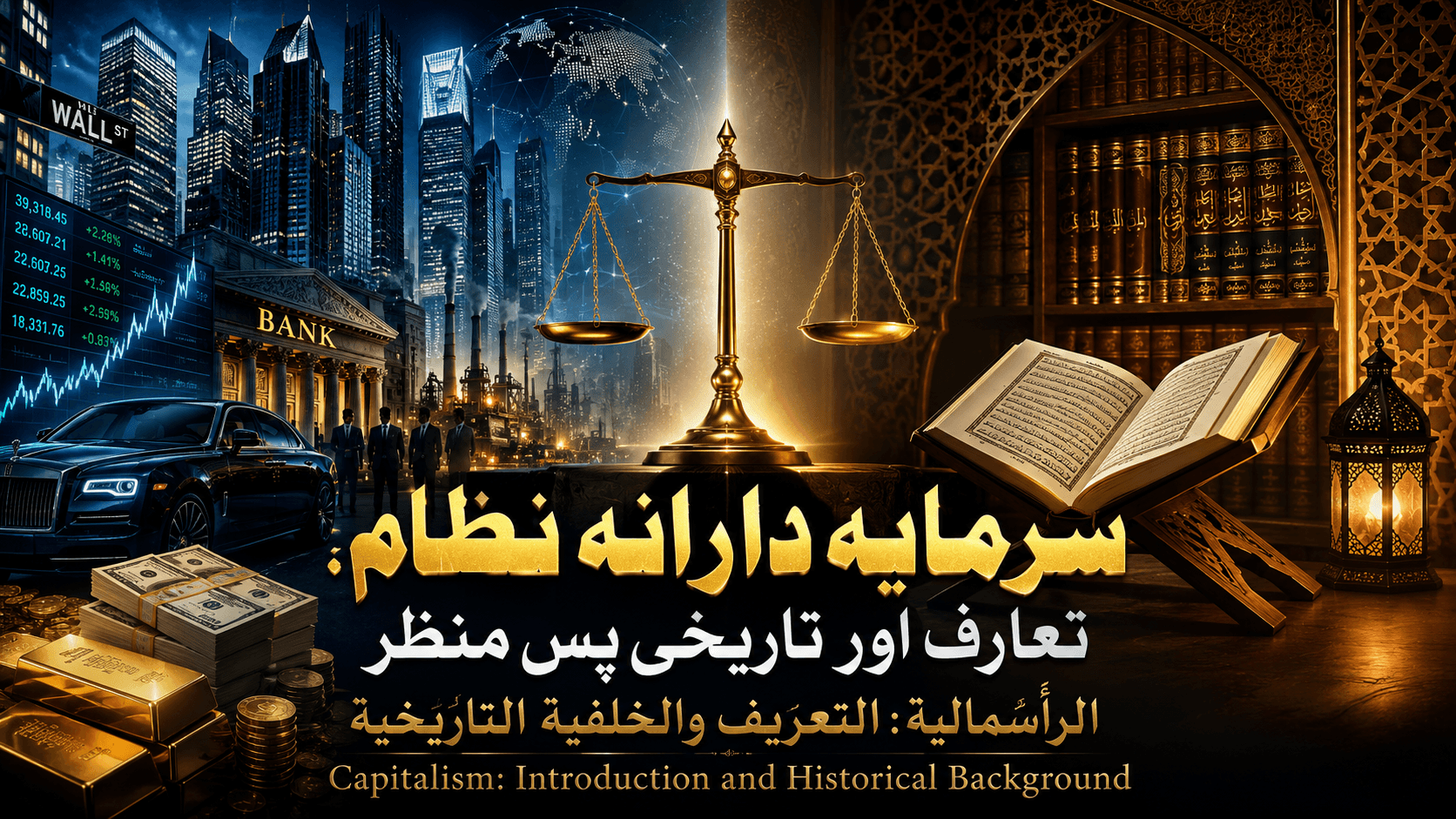
1. Definition
Capitalism is far more than a particular economic system or a mechanism for organizing markets. It represents a comprehensive material civilization and a distinct worldview that shapes political, economic, and social life. At the heart of this worldview lies a single foundational value: freedom.
From the capitalist perspective, human beings are born inherently free and autonomous. Consequently, no external authority—whether derived from divine revelation, religious tradition, or universal moral principles—should impose unnecessary restrictions upon individual choice. The individual is therefore regarded as the primary decision-maker, possessing the right to pursue personal interests, define personal values, and determine the course of life according to individual judgment.
Within this framework, the market serves as the principal institution through which individual freedom is expressed and realized. It is through voluntary exchange, competition, and private ownership that people satisfy their material needs and pursue their personal aspirations. In this sense, capitalism is not merely an economic arrangement; it is an intellectual and civilizational project that seeks to translate individual liberty into practical reality through market institutions while simultaneously promoting the continuous accumulation and expansion of capital.
2. Historical Background
The emergence and development of capitalism cannot be understood apart from the profound intellectual, religious, and political transformations that reshaped Europe between the sixteenth and eighteenth centuries. It arose during a period in which the long-standing political and intellectual dominance of the medieval Church gradually weakened, while the feudal order began to give way to new economic and social structures.
One of the turning points in this transformation was the Protestant Reformation, led by Martin Luther, which fundamentally altered the relationship between religion and public life. By redefining religion primarily as a matter of individual conscience rather than institutional authority, the Reformation significantly reduced the Church's political and economic influence and created conditions favorable to the emergence of new commercial and financial institutions.
The Enlightenment further accelerated this transformation by placing human reason at the center of intellectual inquiry. Confidence in rational thought, scientific investigation, and individual judgment gradually replaced reliance on traditional religious authority as the primary means of understanding society and organizing political life. Romanticism, in turn, reinforced the significance of individual experience, creativity, and personal identity, further strengthening the culture of individualism.
During the seventeenth and eighteenth centuries, the rapid advancement of modern science profoundly influenced Western intellectual life. Empirical observation and scientific reasoning increasingly became the dominant sources of knowledge, contributing to the development of a worldview in which human beings were viewed as capable of shaping their own destiny without dependence upon revealed guidance.
Several influential philosophers played decisive roles in shaping this intellectual environment. Immanuel Kant emphasized the autonomy of the human self and its capacity for moral self-legislation. G. W. F. Hegel presented history as the unfolding of human consciousness through the development of the state and society. Although Karl Marx offered a powerful critique of capitalism and its class structure, his alternative socialist vision likewise remained grounded in a fundamentally material understanding of history, differing primarily in its economic organization rather than in its underlying philosophical commitment to historical materialism.
3. Core Principles:
Capitalism rests upon a number of interconnected philosophical and economic principles that collectively define its intellectual framework.
Perhaps its most fundamental assumption is that individuals possess the right to pursue their own interests and satisfy their desires according to their personal preferences. Rather than accepting a divinely revealed or universally binding moral hierarchy, individuals themselves determine what they consider valuable, desirable, or beneficial.
Within this framework, capital becomes the principal instrument through which freedom is exercised. Economic resources are not merely a means of production; they are also regarded as the primary source of personal independence and opportunity. Consequently, greater ownership of capital generally translates into greater practical freedom and a wider range of life choices.
Capitalist societies also tend to organize social relationships around voluntary agreements and mutual exchange rather than inherited obligations or traditional communal structures. As a result, society increasingly functions as a contractual society, where relationships are shaped by consent, negotiation, and reciprocal benefit.
Unlike the traditional marketplace, the modern capitalist market is not simply a location where goods are exchanged. It is a comprehensive institutional system capable of assigning economic value to virtually every aspect of human life. Goods, services, knowledge, labor, emotions, cultural expressions, and even certain social relationships can become commodities subject to exchange within the market economy.
Throughout its historical evolution—from Fordism, characterized by mass industrial production and welfare-oriented economic policies, to Post-Fordism, marked by globalization, privatization, technological innovation, and flexible production—the central objective of capitalism has remained remarkably consistent: the continuous expansion, accumulation, and concentration of capital. While its institutional forms have changed over time, the pursuit of sustained economic growth and capital accumulation has remained the defining feature of the capitalist system.
Have a question about this post?
Ask a Question
About the Author
Muhammad Awais
By the boundless grace and guidance of Allah Almighty, Muhammad Awais is associated with the noble journey of teaching, research, and writing. In his quest to quench his thirst for knowledge, he has completed the Dars-e-Nizami (Traditional Islamic Education), an MA in English, an M.Phil in Islamic Studies, and a B.Ed. Currently, he is pursuing his Ph.D. in Islamic Studies at Hazara University. The core of his academic interests primarily revolves around Islamic Sciences, Western Philosophy, contemporary intellectual discourses, Ilm al-Kalam (Islamic Scholastic Theology), and both classical and modern logic—subjects he continuously strives to comprehend more deeply and reflect upon. His association as a 'Master Trainer' with the British Council and other local institutions, coupled with his experience in competitive examinations, has acquainted him with a diverse array of academic disciplines, for which he is profoundly grateful to the Lord of Majesty. With his very limited abilities, he is making a humble effort to contribute a small share towards serving knowledge, offering intellectual guidance, and fostering an environment of positive academic dialogue. It is his heartfelt prayer that the Lord of the Worlds graciously accepts these modest and fragmented efforts in His Divine Presence, and makes this knowledge beneficial for His creation. Ameen.